Solar Panels for Stables & Equestrian Yards
MCS-certified solar and battery storage designed around a working yard — arena lights, hot water and walkers, all year round.
- MCS Certified
- NICEIC
- RECC
- TrustMark
- IWA-Backed
ACCREDITED FOR UK COMMERCIAL & DOMESTIC WORK


Your load peaks after dark. That changes the whole design.
An equestrian property is quietly one of the best-shaped solar sites in rural Britain — and one of the least used. Stable blocks, American barns, indoor schools and hay barns give large, unshaded, mostly south-facing roof spans that already exist and sit idle. What makes equestrian different isn't the roof, though — it's the load. Yards draw power all year, and demand peaks exactly when the sun is weakest: evening and winter arena lighting, wash-bay hot water, horse walkers through short days, security lighting overnight. That mismatch is why a naïve 'just cover the roof' design underperforms here. A system built for a working yard weighs self-consumption honestly, sizes generation to the daytime base load, and adds battery storage where the real value is running the evening ménage lights on your own power. Done right, it turns your biggest fixed bill into a fixed asset.
The thing a specialist tells you that a generalist never does: on an equestrian yard, roof coverage is not the point, timing is. Your power curve is almost the mirror image of a solar panel's. Floodlit lessons in the ménage, the wash-bay immersion, the solarium and overnight frost protection fall after dark and in winter, while the panels above them generate at midday in summer. That is why a naive "just fill the roof and watch the bill vanish" design quietly disappoints here. We size to your real half-hourly usage, add a battery to carry daytime generation into the evening peak, and are straight with you about where the numbers land.
- We design for the equestrian load — evening and winter arena lighting — with battery storage, not just roof coverage.
- Indoor schools, American barns and stable blocks give large unshaded roofs; we mount and wire around a live yard.
- We know horse-keeping isn't 'agriculture' for planning — equestrian use is often sui generis, and we design and document accordingly.
- Off-grid and weak-grid systems for field shelters and remote yards where a mains upgrade would cost more than the array.
The honest case for solar on a yard
From first enquiry to commissioning in 2-5 months
A clear, transparent process worked around your yard, no shutdown of lessons or turnout, no high-pressure sales.
- 01Day 1-7
Free desk feasibility
We pull your half-hourly meter data, or estimate from your arena lights, wash-bay and walker loads, and model an array and battery sized to your real usage.
- 02Week 2-4
On-site survey
Structural and electrical engineers survey the stable-block, American-barn or indoor-school roof, the supply and any single-phase constraint. Fixed-price proposal follows.
- 03Month 1-3
Planning & G99
We confirm the route, Part 14 Class J permitted development or a full application for Green Belt, listed or National Landscape sites, and submit the G99 grid application with any export limit.
- 04Month 2-5
Install & commission
On site for a few days to a couple of weeks, worked around turnout, lessons and horse welfare. Commissioning, training and monitoring active.
Specialists across every equestrian setup
A DIY livery, a competition yard, a BHS-approved riding school, a stud, a private home stable and a remote off-grid field shelter each size, cost and pay back differently. Pick yours.
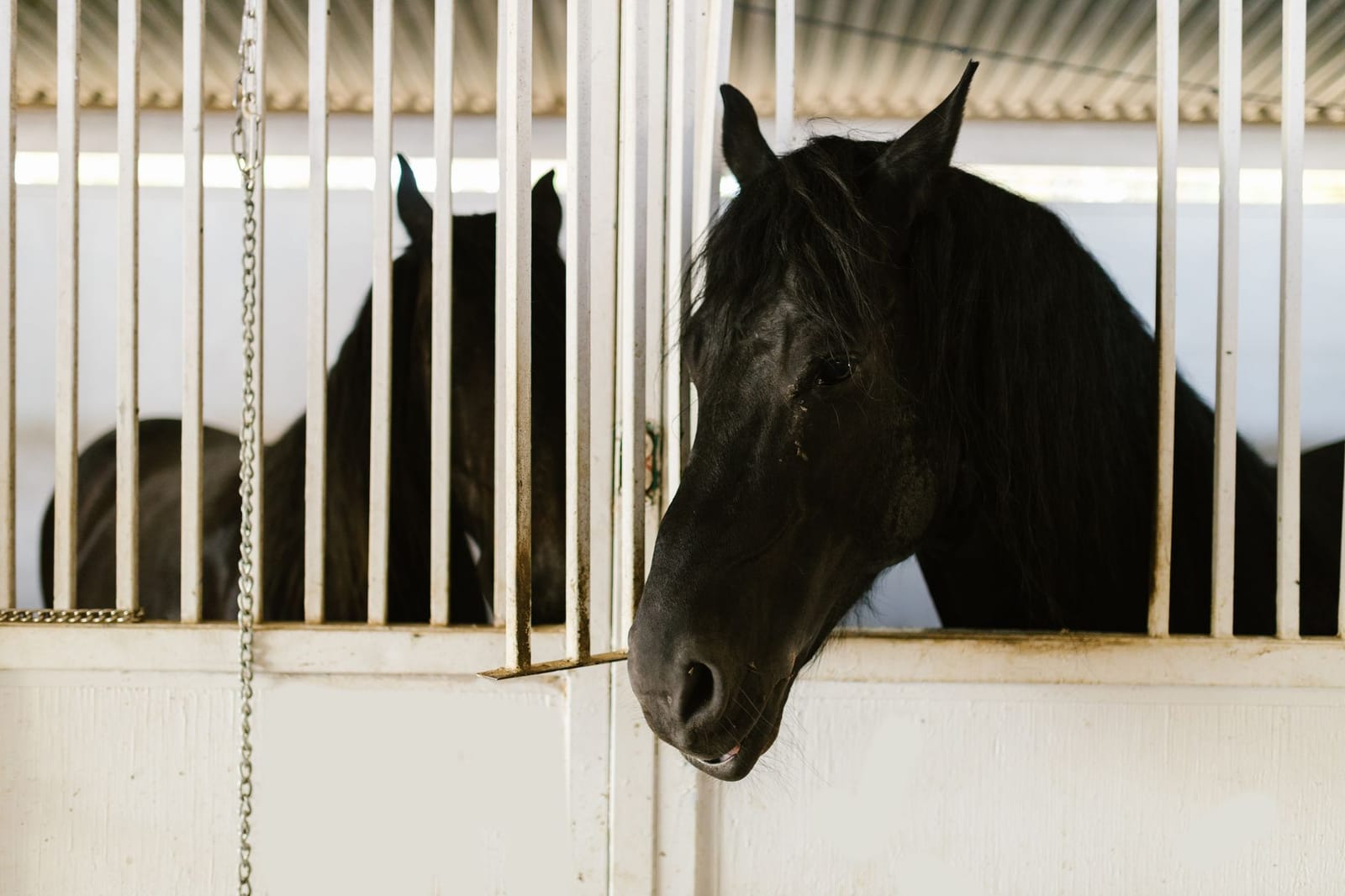
DIY & Part-Livery Yards
4–10 kW. 11-year payback. £6,000–£15,000 (plus roughly £5,000 for a small battery).
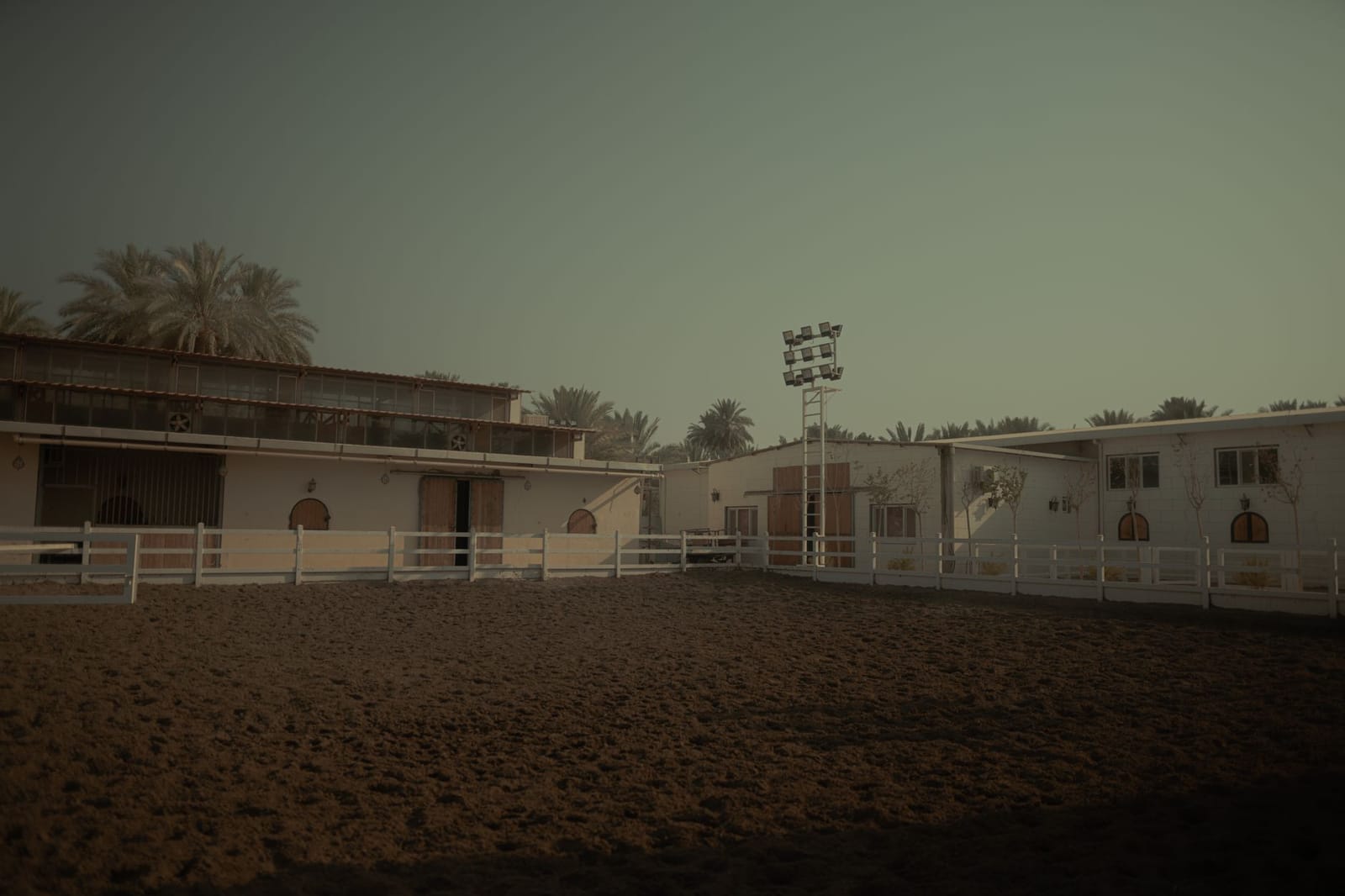
Full-Livery & Competition Yards
10–30 kW. 8-year payback. £12,000–£40,000 (plus a battery at £6,000–£12,000).
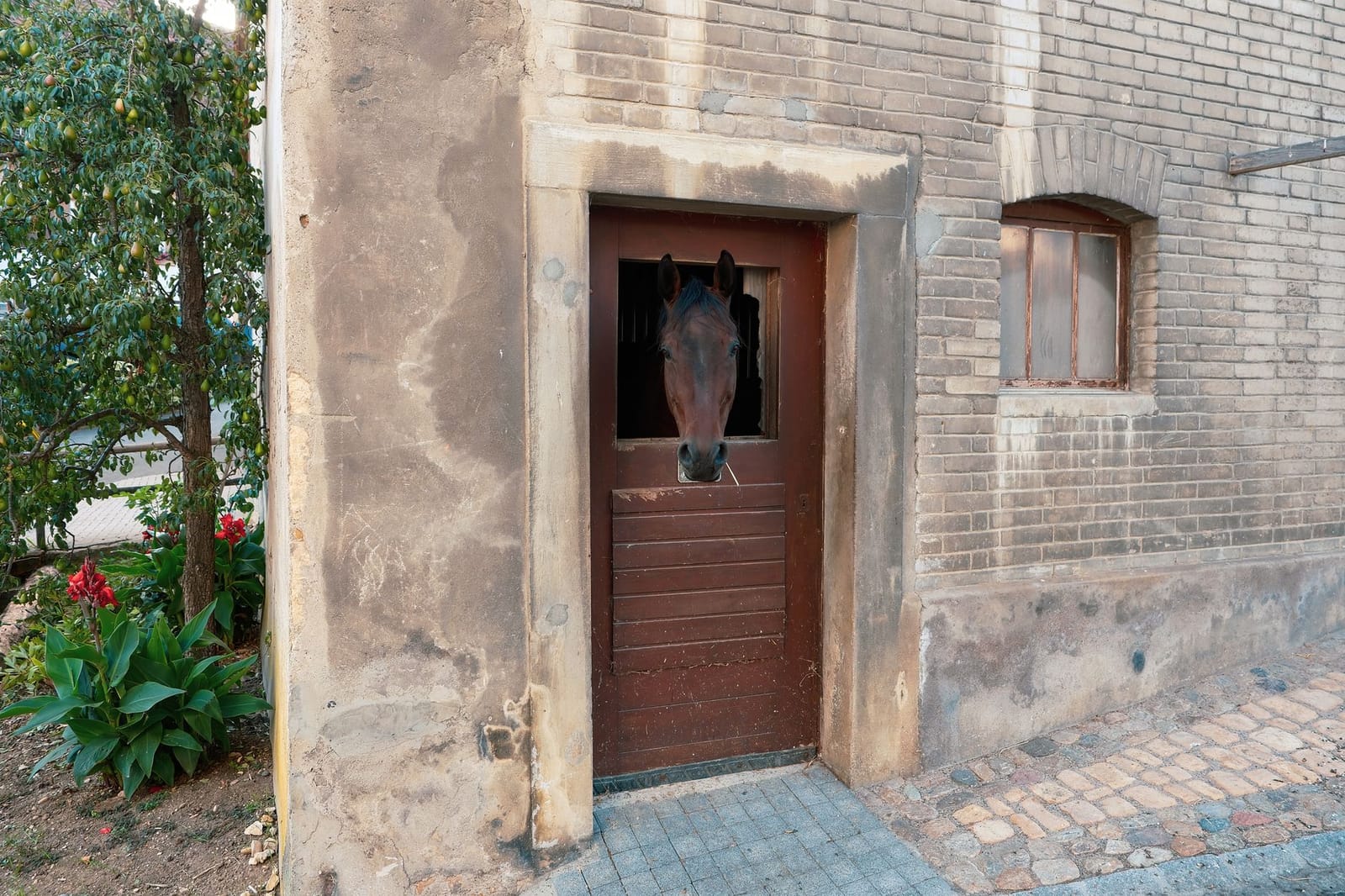
Riding Schools & Equestrian Centres
20–100 kW. 9-year payback. £22,000–£110,000 (plus a battery at £8,000–£25,000).
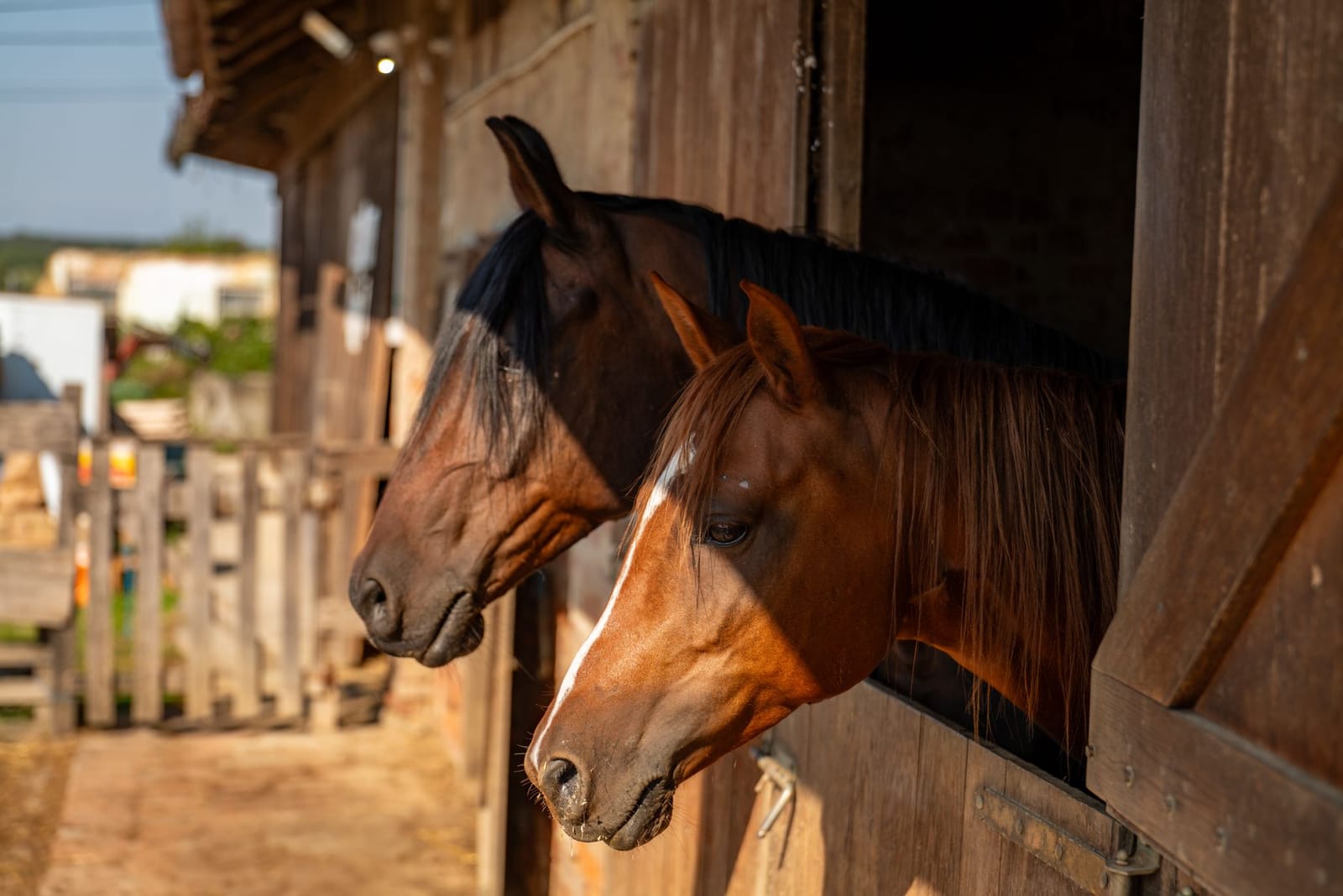
Stud & Breeding Yards
15–50 kW. 8-year payback. £16,000–£60,000 (plus a battery at £6,000–£15,000).
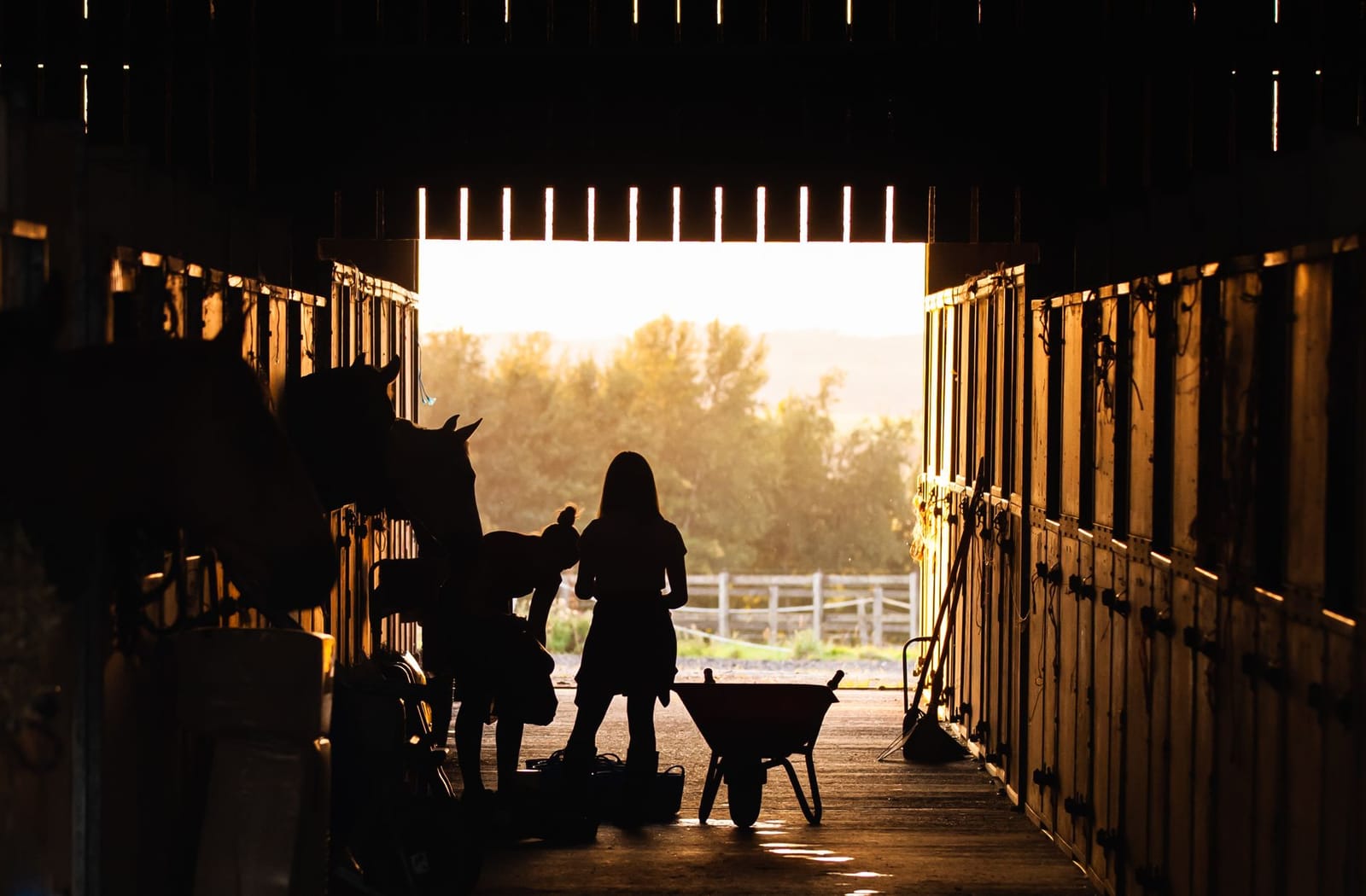
Private Stables & Equestrian Homes
4–12 kW. 10-year payback. £6,000–£18,000 (plus a home battery at £4,000–£9,000).
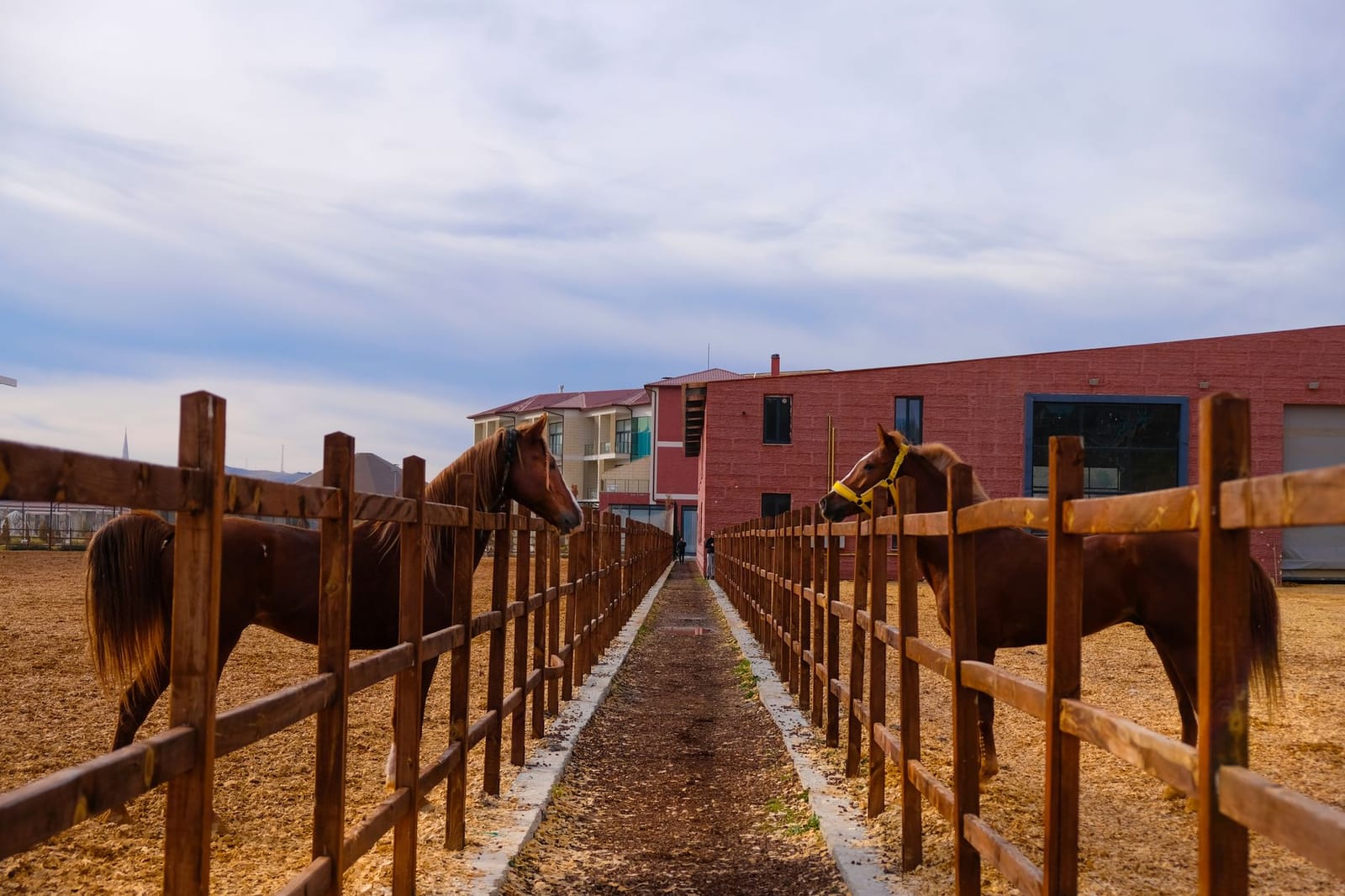
Off-Grid Field Shelters & Remote Stables
0.5–3 kW. 5-year payback. £2,000–£8,000 (panel plus battery plus charge controller).
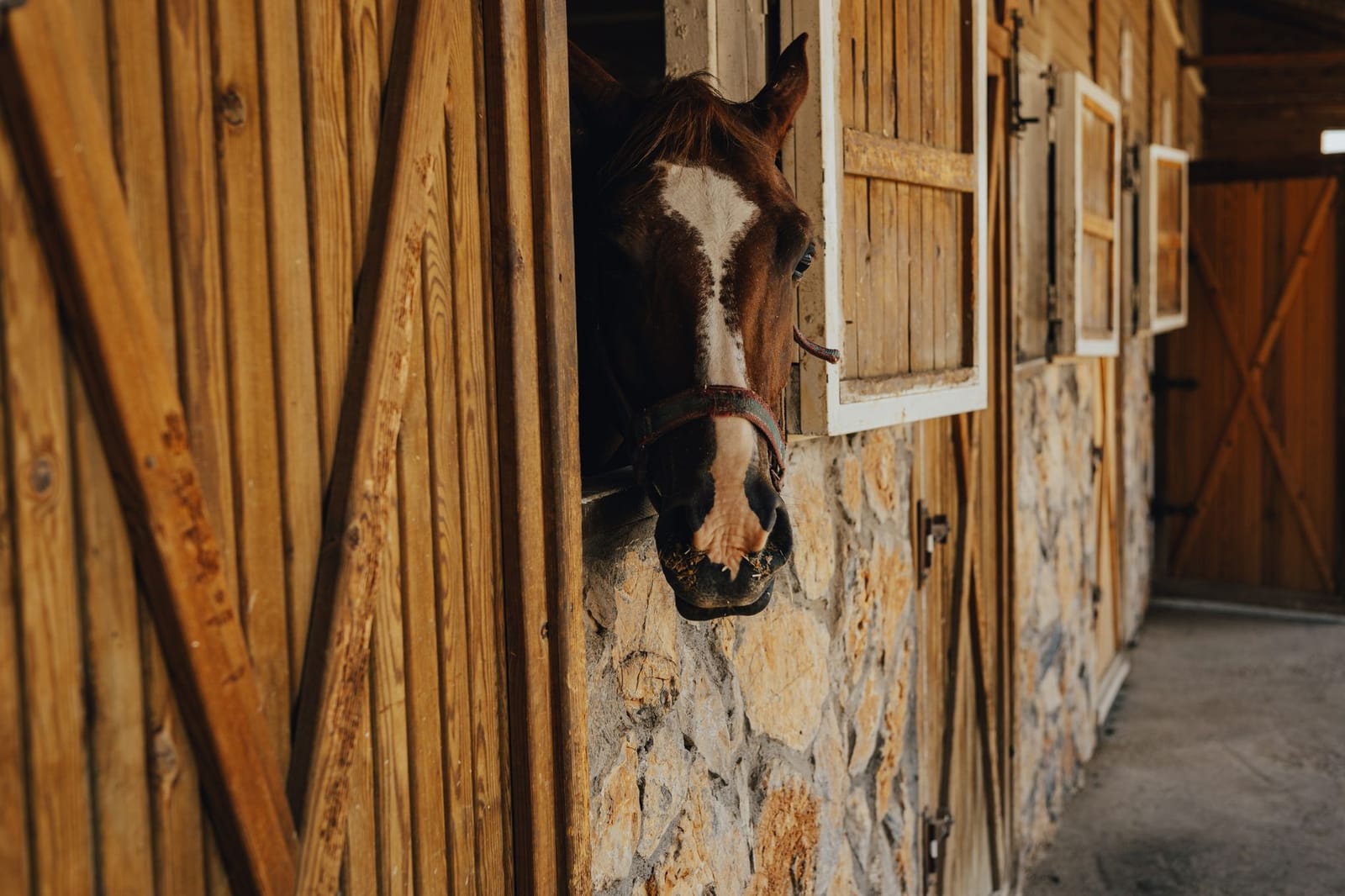
55 kW on a Riding-School Indoor Arena — Daytime Lessons, Daytime Sun
Illustrative worked example. A BHS-approved centre with a large indoor school and an adjoining American barn runs lessons through the day, so its heavy lighting and hot-water demand lines up with generation, while winter floodlighting is the year-round cost driver. The clear indoor-school and barn roofs give the biggest solar canvas on the site.
Equestrian solar specialists vs a general roofer or electrician
| Specialist (us) MCS-certified, equestrian-focused | Generalist contractor General electrical / building | In-house DIY Self-managed | |
|---|---|---|---|
| MCS commercial & domestic certification | |||
| Sizes to your evening/winter load, not just the roof | |||
| Designs a battery to run the ménage lights after dark | |||
| Knows equestrian is not “agriculture” — the Class J route | |||
| Handles Green Belt, listed & National Landscape cases | Sometimes | ||
| Works around turnout, lessons & horse welfare | Sometimes | ||
| Off-grid design for remote field yards | |||
| IWA 10-year insurance-backed workmanship warranty |
THE MONEY, REFRAMED
Own your power — stop renting it from the grid
Every unit you buy from the grid is money spent and gone. A solar-and-battery system turns your single biggest fixed cost into an owned asset rather than an expense: you generate the power your arena lights, wash bay and walkers use, and you keep it. Most yards never touch their capital to do it — asset finance spreads the cost over five to seven years and is often covered by the bill it replaces, while a trading yard writes off the whole system in year one through the Annual Investment Allowance. We are honest that a Power Purchase Agreement rarely suits a small yard, so we show you the funding route that actually fits. See the numbers on the cost guide.
BEFORE YOU BUY
The four questions that decide your payback
Solar on a yard is not just panels on a roof. Four questions, more than anything else, set your return: what it costs, whether you need planning, whether a battery pays, and how you fund it. These guides walk through each one for an equestrian yard.
What it costs
Real UK prices by yard size and system, before and after tax relief.
Do you need planning?
Why equestrian is not agricultural, the Class J route, and Green Belt.
Do you need a battery?
When storage pays for an evening-peaked yard, and when it does not.
How to fund it
AIA for a trading yard, 0% VAT at home, SEG, and the grant myth.
Solar built around your yard's load, not just your roof
Stable yards, liveries and riding schools now face the same rising, volatile electricity price as any other business, and for a thin-margin yard, or a riding school in a sector that has lost more than 250 schools since 2018, that bill lands hard. On-site solar is one of the few controllable ways to take a permanent slice out of it. But solar on a yard is a specialist job, and the first thing we will tell you is what most installers will not: on an equestrian site, the roof is rarely the constraint. The timing of your load is.
Why your evening arena lights change everything
An equestrian yard draws power all year, and its biggest draws peak in the evening and in winter: the floodlit indoor school or outdoor ménage where people ride after work in the dark half of the year, the wash-bay immersion, the solarium, overnight frost protection on drinkers and troughs. Solar panels generate the opposite way, at midday and in summer. That mismatch is the single most important fact in stable solar, and it is why a design that just fills your roof underperforms. We size the array to your real electrical demand from your half-hourly meter data, and we add a battery to store daytime generation and release it into the evening lighting peak. A used unit avoids around 26p of import while an exported one earns only about 12p under the Smart Export Guarantee as at 2026, so self-consumption, not export, is where the money is, and it survives every cut to export rates. Put your own figures through the savings calculator, or read whether it stacks up for you on is solar worth it for stables.
Every kind of yard sizes differently
We build around the yard type rather than swapping a noun on a template. A DIY or part-livery yard has a small, spiky load and self-consumes best with a battery or a diversion to hot water. A full-livery or competition yard has staff on site through the day and larger loads that solar can serve directly. A riding school or equestrian centre has the biggest roof and the biggest load in its indoor school, and the tightest margins. A stud or breeding yard adds a spring night load from foaling boxes and cameras. A private home stable can pair the house, the horses and often an EV or horsebox under the 0% VAT relief. And a remote off-grid field shelter runs a standalone battery system where a grid connection would cost more than the array. Each has its own sizing, cost and payback.
The planning question most yards get wrong
Here is the misconception that costs owners the most: keeping horses for riding, livery or sport is not "agriculture" in planning law. Under section 336 of the Town and Country Planning Act 1990 only grazing is agricultural, so the agricultural permitted-development rights that farms rely on generally do not cover a purpose-built stable block, American barn or indoor school. That does not ban rooftop solar. Solar has its own permitted-development route, GPDO 2015 Part 14 Class J for a non-domestic building, which is not tied to agricultural use and, since the 1 MW cap was removed in December 2023, has no capacity limit. The cases that need a full planning application are ground-mounted arrays, listed or conservation-area stables, sites in National Landscapes and National Parks, and, very commonly, buildings put up without permission on the assumption that "it's agricultural, so it's allowed". Because most horse ownership sits in the Green Belt, we confirm the exact route with your council before you order anything. We bust the rest of the common myths on our stable solar myths page.
The funding you can actually claim
Most yards do not need capital up front. If you run the yard as a business, the Annual Investment Allowance lets you deduct 100% of the install cost, up to £1m a year, from taxable profit in year one, roughly a £25,000 saving on a £100,000 system at the 25% rate. Solar is a special-rate asset, so this is AIA, not "full expensing", and it applies even though horses are not "agriculture", because AIA is a trade relief, not a farm grant. If the stables are at a private home, you pay 0% VAT until 31 March 2027, then 5%. What there is not, and we will say so plainly, is a government grant specifically for stable solar: the DEFRA farm rounds are closed, and Farming in Protected Landscapes, though open to 2029, is a farmer and land-manager scheme that a standalone yard will not usually qualify for. The honest routes are AIA, the Smart Export Guarantee and, at home, 0% VAT. See them side by side on the grants and funding page. Always take your own tax advice.
Old roofs, single-phase supplies and remote yards
Three practical checks matter more on a yard than on a modern warehouse. Many pre-2000 stable and barn roofs are grey asbestos-cement, which cannot be drilled or loaded with panels, so under the Control of Asbestos Regulations 2012 the right route is usually to strip and re-clad first, then mount the array, clearing a liability and gaining a better roof. Most yards sit on a rural single-phase supply, where exporting more than 3.68 kW per phase needs a G99 application to your Distribution Network Operator, so we use export limitation or a three-phase upgrade to size up, and because your value is self-consumption anyway an export-limited design rarely costs you anything real. And a genuinely remote field yard with no economic grid route is a natural fit for a standalone off-grid system. Local grid capacity and council net-zero targets shape a project too, so each of our area guides covers the local picture for a major UK equestrian region.
What a generalist misses
A working yard is a live environment with animals in it, and that changes how solar is installed. We schedule roof works around turnout, lessons and competitions, protect horse welfare during the install, and keep cameras, security lighting and water pumps running. We are MCS-certified for both commercial and domestic work, NICEIC-registered, and RECC and TrustMark licensed, and every install carries a ten-year insurance-backed workmanship warranty on top of the 25-year panel warranty. If your roof, load profile, tenure or planning position does not suit solar, we will tell you, because we would rather lose a sale than fit a system that does not pay. When you are ready, request a free quote or read the questions we hear most on our FAQs page.
Equestrian regions we cover
Solar for stables, liveries and riding schools across the UK's horse country. Click any area for the local equestrian scene, council planning position and grid-connection picture.
York
North Yorkshire. 141,685 population. City of York Council 2030 net zero.
Winchester
Hampshire. 135,632 population. Winchester City Council 2030 net zero.
Exeter
Devon. 130,428 population. Exeter City Council 2030 net zero.
Cheltenham
Gloucestershire. 117,546 population. Cheltenham Borough Council 2030 net zero.
Chester
Cheshire. 92,760 population. Cheshire West and Chester Council 2045 net zero.
Taunton
Somerset. 64,621 population. Somerset Council 2030 net zero.
Common questions
The questions we hear most from yard owners, riding-school principals and private horse owners.
How much do solar panels for stables cost in the UK?
It depends on the roof and the load. A private or DIY yard at 4–10 kW is roughly £6,000–£15,000, plus around £5,000 for a small battery. A full-livery or competition yard at 10–30 kW runs about £12,000–£40,000. A riding school or equestrian centre at 20–100 kW, using the indoor-school roof, is typically £22,000–£110,000. A remote off-grid field shelter is roughly £2,000–£8,000. These are indicative planning ranges, confirmed at survey — equestrian systems are sized to your real half-hourly usage, not to how much roof is free.
Do I need planning permission for solar panels on my stables or indoor school?
Often you can use permitted development for a roof array — but via the solar-specific route (GPDO Part 14 Class J for non-domestic buildings), not the agricultural PD that farms use, because keeping horses for riding, livery or sport is not 'agriculture' in planning law. Roof PD generally works if the building is lawful and not listed, the panels sit within the projection and edge limits, and you obtain the glare prior-approval. You will usually need a full planning application for ground-mounted arrays, listed or conservation-area buildings, sites in National Landscapes or National Parks, or where the stable itself has no planning permission. We confirm the exact route with your council first.
My stables are on agricultural land or I have an agricultural tie — doesn't that mean solar is automatically allowed?
No. The agricultural definition in TCPA 1990 s.336 only covers grazing horses; once they are ridden, hard-fed, rugged or kept commercially the use is equestrian and typically sui generis, and the agricultural permitted-development rights (and Class Q/R conversion rights) fall away. Solar can still be permitted development, but under the separate Part 14 Class J solar rules — and those depend on the building being lawful and not in a protected or listed setting, so it is worth checking properly rather than assuming.
We're in the Green Belt — can we still install solar?
Usually yes for roof-mounted panels: Green Belt does not remove rooftop solar permitted development on a lawful building. Ground- or field-mounted arrays are much harder — they are treated as inappropriate development needing very special circumstances. As most yards are in the Green Belt, we normally recommend maximising roof capacity (plus a battery for your evening load) and only pursuing a ground array with a dedicated planning case.
Solar generates in the day, but our biggest load is evening arena lights — will it actually help?
Yes, if it is designed for a yard rather than a house. Your power curve is almost the mirror image of a solar panel's: floodlights, solariums, wash-bay hot water and frost protection land after dark and in winter, while panels generate at midday in summer. We size to your real half-hourly usage and add battery storage to shift daytime generation into the evening lighting peak — so the ménage lights run largely on stored solar. We are honest about where a battery pays and where it does not, rather than promising the bill simply disappears.
Do I need a battery with my stable solar?
More often than on a typical daytime-load commercial roof, yes — because equestrian demand is evening- and winter-weighted. A battery shifts midday surplus into the evening lighting, solarium and wash-bay peak, and a self-consumed unit (avoiding around 26p of import) is worth about double an exported one (roughly 12p, as at 2026). We size storage to your real usage and tell you honestly when it pays and when a simpler export-plus-diversion design is better.
Get a free stable solar quote
Responds within one working day
- 1. Free desk feasibility from your meter data and roof, no obligation.
- 2. Site survey and a fixed-price proposal, itemised in writing.
- 3. Install and aftercare by MCS-certified engineers.
- MCS Certified
- NICEIC
- RECC
- TrustMark